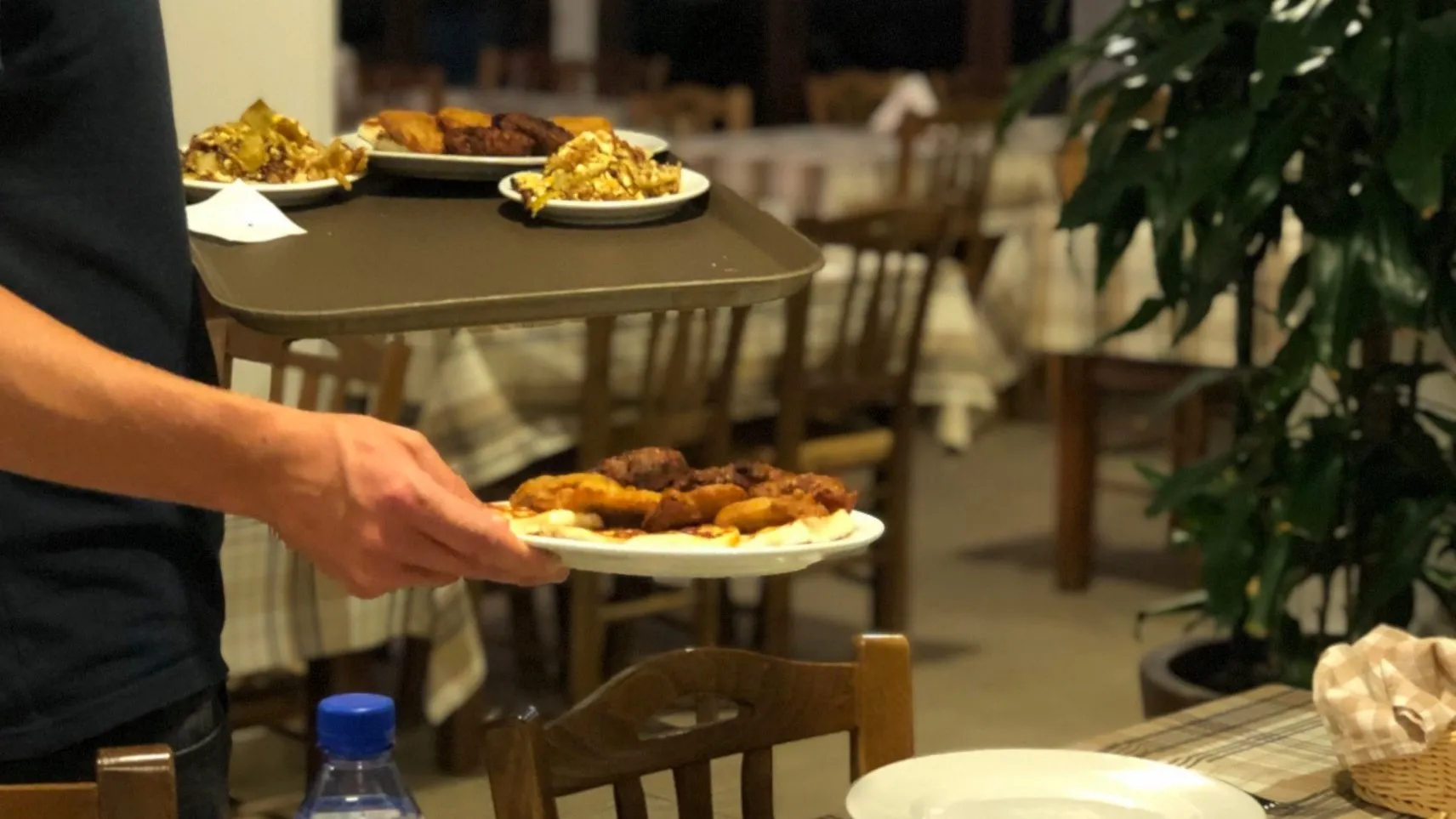
How Tochni Tavern saved 41 staff hours every quarter by simplifying the bill.

41 hrs
staff hours back every quarter

A large table is usually good news for a restaurant.
It means more guests, more orders and a lively dining room. But when the meal ends and everyone wants to pay separately, the same table can hold a server’s attention for much longer than expected.
That was a familiar situation at Tochni Tavern.
A member of the team had to bring the card machine to the table, wait while guests worked out their individual shares and process several payments one after another. Each transaction took only a short time, but the full process was repeated across busy shifts and large groups.
After introducing FoxPay, guests could review the bill, select their share and pay directly from their own phones.
By comparing tables closed with FoxPay against tables closed without it, Tochni Tavern measured a saving of 41 staff hours every quarter.
When one bill becomes several transactions.
Splitting a restaurant bill is rarely difficult because of the calculation alone.
The challenge is coordinating the payment.
Guests need time to decide who is paying for what. The card machine moves around the table. Several cards may need to be processed, and the server stays involved until the final payment is complete.
During a quiet service, this may not cause much disruption. During a busy shift, however, it can keep a member of staff at one table while other guests need attention.
At Tochni Tavern, the issue was not one particularly slow payment. It was the time created by repeating the same process across many tables.
Letting every guest pay their own share.
FoxPay moved that process onto the guest’s phone.
Guests scan the QR code at the table, review the bill and choose what they want to pay. Each person can complete their share separately, without waiting for the card machine to become available.
There is no app to download, and FoxPay works alongside the restaurant’s existing POS.
For the team, that meant fewer trips with the terminal and less time coordinating payments for large groups. For guests, it meant having control over their own part of the bill.
The restaurant did not need to change the way it welcomed, served or looked after guests. The final step simply required less involvement from the staff.
A shift, simulated
Fewer trips. More time on the floor.
One server, one evening, two ways to pay. Follow the white dot.
Every payment means fetching the terminal, walking it to the table and bringing it back.
Guests pay from their phones. The time goes back into hospitality: checking in, topping up, recommending dessert.
Still view: by the time all 4 FoxPay tables have paid, the server with the card machine has reached 2 of them. With FoxPay, the server is at another table, asking “Room for dessert?”
ResultAt Tochni Tavern: 41 staff hours back every quarter
In the owner’s words
“Big tables used to mean long waits while everyone split the bill. Now guests pay their share on their phones, making it easier for them and for us.”
What changed at Tochni Tavern.
With more guests completing their payments from their phones, the team spent less time carrying the card machine between tables and processing separate transactions.
Across one quarter, the time saved added up to 41 staff hours.
Those hours did not come from one dramatic change. They came from removing small, repetitive tasks from service:
- Fewer trips to collect and return the card machine
- Less time processing several cards at one table
- Less coordination when groups split the bill
- More time available for guests throughout the dining room
The individual moments were small. The cumulative result was not.
More time where it matters.
Faster payment is useful for guests, but the operational value goes further.
When the team is not tied up completing several transactions at one table, staff can remain present across the restaurant. They can respond to another guest, clear a table, answer a question or prepare for the next arrival.
This is particularly important during peak service, when even a few minutes can affect the rhythm of the entire dining room.
At Tochni Tavern, FoxPay did not replace hospitality. It gave the team more time for it.
What do repeated payment tasks cost your team?
Most restaurants already measure labour, food costs and table turnover.
The time spent completing payments can be harder to notice because it disappears in small increments throughout every shift.
At Tochni Tavern, simplifying that final step returned 41 hours to the team every quarter.